





Essential Insurance Covers Every Australian Tradie Should Know
By Arthur Hatzi, Legion Insurance Brokers Australia
Running a trade business is rewarding, but every project brings risk.
A small error, a damaged tool, a stolen ute, an injured customer, or a dispute over completed work can put pressure on cash flow and reputation. For builders, plumbers, electricians, carpenters, painters and specialist contractors, insurance is part of keeping the business moving.
The right cover is not always the most expensive policy. It is also not always the cheapest quote. Good insurance starts with understanding:
What risks your business faces
What your policy actually covers
What exclusions could cause problems
How your income, tools, equipment and reputation are protected
With over 20 years’ experience in insurance, I have helped many trades and small businesses review their cover, improve protection and find better value. This guide explains the key insurance covers Australian tradies should understand before they accept a quote or renew a policy.
This article is general information only. It does not take into account your objectives, financial situation or needs.

Public Liability Insurance is the foundation cover for many tradies
Public Liability Insurance is one of the most common covers for trade businesses. It is designed to protect your business if your work activities cause:
Injury to another person
Damage to someone else’s property
Legal liability arising from your business activities
For many builders, plumbers, electricians and contractors, Public Liability is the starting point for Business Insurance. Many principals, builders, councils, real estate agents and commercial clients will ask for a certificate of currency before you start work.
A plumber causes water damage
A plumber completes work at a customer’s home. Several days later, a connection fails and water damages the flooring, cabinets and furniture.
The customer seeks compensation for the damage.
Public Liability may respond because there has been third-party property damage. The insurer would usually assess the circumstances, the policy wording, any exclusions and whether the business is legally liable.
Public Liability does not cover everything that goes wrong
One of the biggest misunderstandings I see is this:
“If something goes wrong with my work, my Public Liability will cover it.”
That is not always correct.
Public Liability may cover resulting damage to other property, but it may not cover the cost of fixing or redoing your own defective work.
For example, if a tiler lays tiles incorrectly, the policy may not pay to remove and replace the faulty tiling. If the faulty tiling causes water to escape and damage other parts of the property, the resulting damage may be treated differently.
The details matter. Policy wording, exclusions, endorsements and the cause of the loss can all affect the outcome.
Common Public Liability traps
When reviewing Public Liability, tradies should pay close attention to:
Business description
The policy should accurately describe the work you do. If you are insured as a painter but also perform high-pressure roof cleaning, that extra activity needs to be disclosed.
Height and depth limits
Some policies restrict work above certain heights or below certain depths.
Heat work
Welding, grinding, soldering and other hot works may have conditions attached.
Subcontractors
Some policies treat subcontractors differently. You need to know whether they are covered, excluded or required to hold their own insurance.
Contractual liability
Signing a contract can create obligations beyond normal legal liability. Not every policy will cover those extra obligations.
Tools and equipment insurance protects what keeps you earning
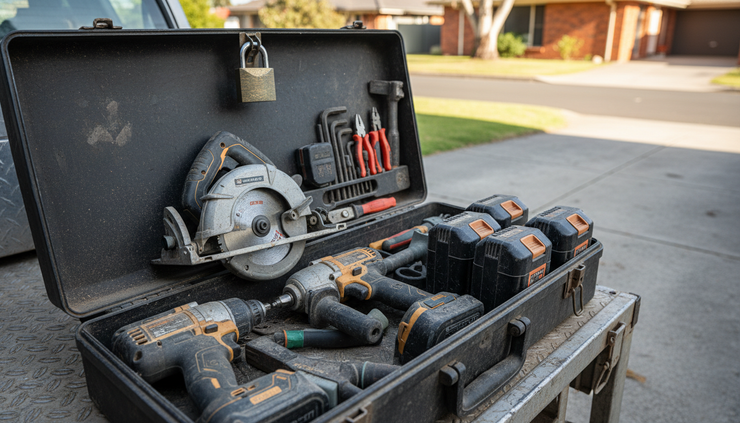
For many tradies, tools are the business. If they are stolen, damaged or destroyed, work can stop immediately.
Tools and equipment insurance can cover items such as:
Hand tools
Power tools
Ladders
Compressors
Testing equipment
Mobile plant and smaller machinery
Toolboxes and trade equipment carried in a vehicle
Theft from utes, vans and trailers is one of the most common concerns for tradies. A locked vehicle does not always mean a claim will be straightforward. Some policies have conditions about forced entry, overnight storage, locked boxes, alarms or where the vehicle was parked.
Check how your tools are valued
A low premium can hide a problem if the policy limits are too low.
Tradies should check:
The total insured value of all tools
Single item limits
Whether expensive tools need to be listed separately
Whether cover applies Australia-wide
Whether tools are covered in transit, on site and at home
Whether hired or borrowed equipment is included
A good review starts with a current tool list. It does not need to be perfect, but it should be realistic. Photos, serial numbers and purchase records can also help if you ever need to claim.
Commercial motor insurance protects the vehicles you rely on
A trade vehicle is more than transport. It can be a mobile workshop, storage unit and advertising sign all in one.
Commercial motor insurance can cover utes, vans, trucks, trailers and other vehicles used for business. Depending on the policy, it may include cover for:
Accidental damage
Theft
Fire
Third-party property damage
Windscreen damage
Towing after an accident
Hire vehicle costs after an insured event
Personal car insurance may not be suitable if the vehicle is mainly used for business. If the insurer does not know the vehicle is used for trade work, a claim may become difficult.
Do not forget trailers and modifications
Many tradies invest heavily in vehicle fit-outs. Canopies, racks, shelving, toolboxes, signage, lifts and specialised equipment should be disclosed.
Trailers also need attention. A trailer loaded with tools, ladders and equipment may not be properly protected under a basic vehicle policy. You may need separate cover or listed accessories.
Contract works insurance matters while the job is still in progress
Contract works insurance, sometimes called construction insurance, is designed to cover physical loss or damage to building works during construction.
It is particularly important for builders and contractors involved in new builds, renovations, extensions and larger construction projects.
It may cover events such as:
Fire
Storm
Theft of materials
Vandalism
Accidental damage to works in progress
If a partially completed job is damaged before handover, someone needs to pay to repair or rebuild that work. Contract works insurance helps deal with that risk.
Make sure the right party arranges the cover
On some projects, the builder arranges contract works insurance. On others, the principal, owner or head contractor may be responsible.
Do not assume. Check the contract and confirm who is arranging the insurance, what is covered, the period of insurance and whether subcontractors are included.
Workers compensation and personal accident cover are not the same
In Australia, workers compensation requirements vary by state and territory. If you employ workers, you may be legally required to hold workers compensation insurance.
Workers compensation generally covers employees for work-related injury or illness. Sole traders, partners and working directors may not automatically be covered in the same way.
That is where personal accident and illness cover may be important. This type of policy can provide a weekly benefit if you cannot work due to an insured injury or illness.
The real risk is not just the medical bill
For many tradies, the bigger issue is income.
If an injury keeps you off the tools for six weeks, the bills may continue:
Mortgage or rent
Vehicle repayments
Business loans
Wages
Supplier accounts
Family living costs
Personal accident, income protection and similar covers should be reviewed carefully. Waiting periods, benefit periods, exclusions and definitions can make a major difference.

Professional indemnity may apply if you give advice or design input
Not every tradie needs Professional Indemnity Insurance. Some do.
This cover is designed for claims arising from professional advice, design, certification or consulting services. It can be relevant if you provide:
Design recommendations
Engineering-related advice
Energy efficiency advice
Project management services
Reports or inspections
Certification or compliance advice
For example, an electrical contractor who provides design advice for a commercial fit-out may face a different risk from one who only completes installation work to a provided plan.
Public Liability and Professional Indemnity cover different types of risk. If you provide advice, plans or specifications, this should be discussed with an Insurance Broker.
Business interruption cover can help after insured damage
Business interruption insurance is designed to help replace lost income after an insured event interrupts normal trading.
For example, if a fire damages your workshop and you cannot operate for a period of time, property insurance may cover the damaged items. Business interruption cover may help with lost gross profit and ongoing expenses during the recovery period.
This cover is often misunderstood because it usually needs to be triggered by insured physical damage. It is not a general safety net for any downturn in work.
For tradies with workshops, warehouses, stock or key premises, it is worth reviewing.
Cyber insurance is becoming relevant for smaller trade businesses
Cyber risk is not limited to large companies.
Many tradies now rely on digital systems for quoting, invoicing, job management, payroll, supplier accounts and customer communication. A hacked email account or fraudulent invoice scam can cause serious financial loss.
Cyber insurance may help with costs linked to:
Data breaches
Business email compromise
Ransomware incidents
Cyber crime
Recovery costs
Specialist response support
Even small operators should use basic controls such as multi-factor authentication, secure passwords, regular backups and careful invoice checks.
A quick comparison of common tradie covers
Cover | What it may help with | Common issue to check |
Public Liability | Third-party injury or property damage | Defective workmanship exclusions |
Tools and Equipment | Theft or damage to trade gear | Overnight storage conditions |
Commercial Motor | Business vehicles, trailers and fit-outs | Correct business use and listed accessories |
Contract Works | Damage to works during construction | Who is responsible under the contract |
Workers Compensation | Employee workplace injuries | State and territory requirements |
Personal Accident | Lost income due to injury or illness | Waiting periods and benefit limits |
Professional Indemnity | Advice, design or consulting claims | Whether your services include advice |
Cyber Insurance | Digital crime and breach response | Email and invoice fraud exposure |
How to review your insurance before renewal
A renewal is the best time to check whether your cover still fits the business. Many tradies renew the same policy year after year, even though their work has changed.
Before renewal, ask these questions:
Has your turnover changed?
Have you hired staff or subcontractors?
Are you doing different types of work?
Have you bought new tools, vehicles or equipment?
Are you working at greater heights or depths?
Have you signed contracts with special insurance requirements?
Do you store materials or stock?
Do you provide advice, reports or design input?
Are your policy limits still enough?
Price matters, but the wording matters more. A cheap policy can become expensive if it does not respond when needed.
As an Insurance Broker, Business Insurance reviews often start with simple questions about the work being done, then move into policy wording, exclusions and contract requirements.

The key takeaway for Australian tradies
Good insurance should match the real risks of the trade business.
Public Liability is important, but it is only one part of the picture. Tools, vehicles, contract works, workers compensation, personal accident, professional indemnity, business interruption and cyber cover can all matter depending on how the business operates.
The best place to start is a clear review of what work you do, where you do it, who works with you and what would happen if something went wrong.
Do not wait for a claim to discover a gap. Review the cover, read the exclusions and ask questions before the next job starts.



Comments